As an Amazon Associate, we earn from qualifying purchases. Some links on this site are affiliate links at no extra cost to you. Our recommendations are based on thorough research and editorial judgment.

How to Set Up Dual Recording Systems for Backup Safety

To set up dual recording systems for backup safety, start by enabling Dual Recording in your system settings. Choose primary and secondary storage options, ideally with at least 1080P resolution for clear footage. Configure your recording schedule and stream profiles for best quality, while keeping an eye on storage space. Regularly check connections and perform maintenance every few months. With the right steps, you’ll enhance your security system and minimize data loss, but there’s more to explore!
Key Takeaways
- Enable Dual Recording in the system settings to initiate simultaneous footage capture on multiple storage locations.
- Select primary and secondary storage options to ensure redundancy and prevent data loss during critical recordings.
- Customize recording schedules and stream profiles to maintain desired video quality and manage storage effectively.
- Regularly test and monitor the system to ensure cameras are functioning and capturing correctly, preventing mid-recording issues.
- Implement cloud-based storage solutions for scalable access to footage and to future-proof your surveillance setup.
Understanding Dual Recording Systems
Imagine a safety net woven just for your recordings. Dual recording systems do just that! They offer a way to capture footage simultaneously from the same camera, ensuring a backup when needed. By enabling the dual recording option, users can choose a primary storage and a secondary one. This nifty setup means critical footage stays safe, even if one recording goes on vacation—permanently.
You can customize your settings, too. Adjust storage types, and set archive rotations by days or size, because who likes a messy file system? With organized naming and file prefixes, finding your recordings becomes a breeze. So, get ready to secure your data while keeping it easy to access—it’s like having a superhero for your records! Consider implementing zero-latency monitoring to ensure real-time feedback while recording your backup audio streams.
Benefits of Dual Recording for Surveillance

Dual recording offers impressive benefits for surveillance, making it a great option for anyone serious about security. By simultaneously backing up video footage, users greatly enhance data redundancy. Imagine capturing every critical incident without leaving anything to chance—no more “Oops, I missed it!” moments. Utilizing dual recording systems means footage is stored on multiple hard drives, significantly reducing the risk of data loss due to hardware failures. Plus, with an extra set of recordings, retrieving evidence during investigations becomes a breeze. It also helps guarantee compliance with legal standards for data retention, which is a win-win. In short, who wouldn’t want reliable, easy access to both primary and backup footage? Using H.265+ compression technology allows both primary and backup recordings to consume minimal storage space while maintaining high video quality.
Choosing the Right Recording Devices

What criteria should one prioritize when choosing recording devices for a dual recording system? First, opt for devices that support a resolution of at least 1080P for those crystal-clear moments. Night vision is crucial, too, making sure recordings remain reliable, even in the dark. Then, consider split-screen display options to view multiple angles simultaneously—pretty cool, right? Weather resistance matters as well; look for models with an IP68 rating for durability against rain or snow. Finally, think about installation type; wired systems guarantee stable connections, while wireless options make installation a breeze for those DIY enthusiasts. And don’t forget, your recordings need storage! Confirm your hard drive can handle all those impressive videos without filling up faster than a popcorn bucket at the movies! For superior audio quality in your recordings, select microphones with cardioid pattern capability to effectively isolate voices while minimizing unwanted background noise.
Recommended Products
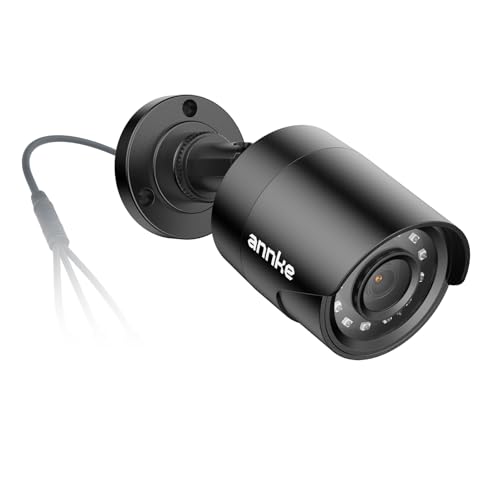
Crystal Clear 1080p Footage: With this 2MP security camera, you can see everything clearly that matters in 1080p HD, easily recognize the details you need in smooth and clear videos, leaving nothing to the imagination

360° Visual Coverage & 1080p Full HD Live View: Provides 360° horizontal & 130° vertical range to cover every corner. Reveals clear and sharp images with more details.
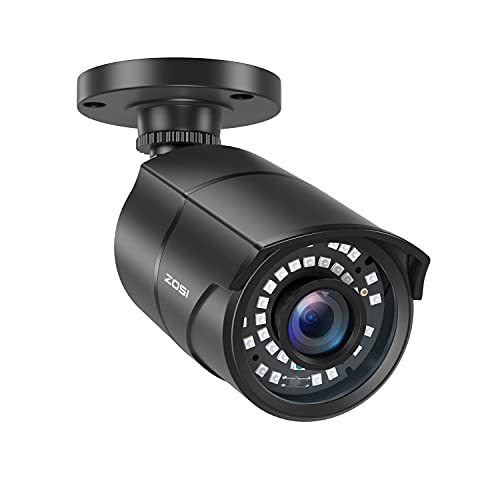
(1). [ Hybrid 4-in-1 HD-CVI/TVI/AHD/Analog ] __ Equipped with an OSD menu, this 1080p security camera supports four video output modes: TVI, AHD, HD-CVI, and CVBS. The OSD menu allows you to switch video formats and adjust video settings. The default mode is 960H, hold the button for about 5 seconds to access the OSD menu and change the output mode.
Configuration Steps for Simultaneous Recording

Configuring a dual recording system may seem tricky at first, but it’s really about following a few straightforward steps. First, head to your system settings and tick “Enable Dual Recording.” Next, choose the desired storage location from the drop-down menu—this decides where your recordings go. Then, customize your recording schedule to capture footage at the right times. It’s vital to select appropriate stream profiles for recording; this guarantees both copies maintain suitable quality. Finally, keep an eye on the estimated required storage space. You’ll want at least one backup available, and nobody wants to run out of room mid-recording! Follow these steps, and you’ll be dual recording like a pro in no time. For optimal audio quality in your backup recordings, ensure your interface supports 24-bit/192kHz sampling to capture the highest fidelity possible.
Recommended Products
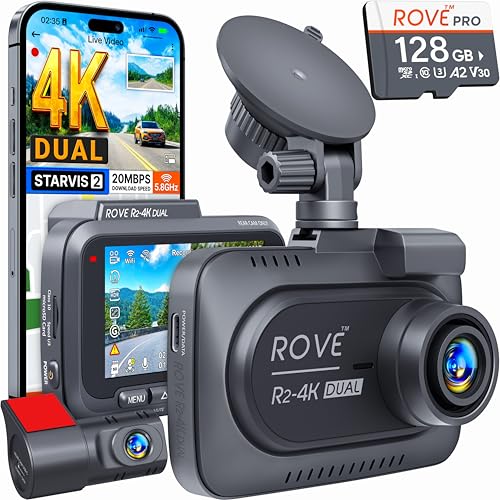
4K FRONT + 1080P REAR RECORDING – ROVE R2-4K DUAL dash cam offers dual-channel recording capabilities, capturing footage simultaneously from both the front and rear cameras. The front camera records at 3840x2160P @30fps, while the rear camera captures 1920x1080P @30fps footage, ensuring clear recordings of the road ahead and behind you. With a 150° ultra-wide angle for the front camera and a 140° angle for the rear camera, you'll capture more of the road with this 4k dash cam.
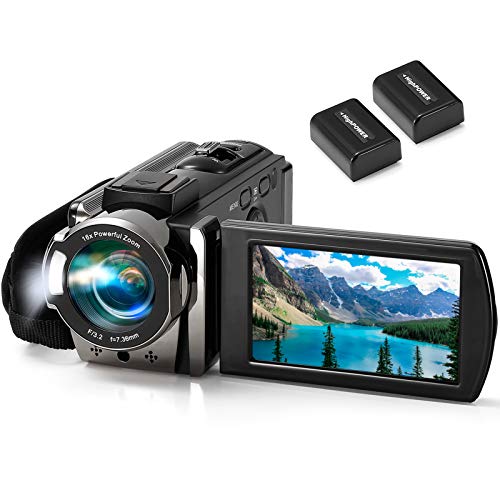
【Video Camera as Webcam】: The video camera is useful to take the beautiful photos and share it in your Youtube. It can be used as webcam when the camera connect the computer. Please operate the camera button to choose the “PC CAM” mode.When the “AMCAP ” window is opened,from which shooting object through the camera will be showed on this window. You can have a video call with your families or friends. Please download the software “AMCAP ” before use the webcam function.

UPGRADED 4K UHD CLARITY - Experience stunning detail with the front camera's upgrade to 4K UHD (2160p) resolution, paired with a 1080p rear camera. The extra-large 12" display provides 1.5 times the viewing area of a standard mirror, significantly reducing blind spots for enhanced safety.
Ensuring Reliable Connections and Bandwidth Management

When setting up a dual recording system, ensuring reliable connections and proper bandwidth management is key. Each location should ideally have a T1 line or similar upload capacity to support steady streaming from cameras. When too many cameras hog the bandwidth, problems pop up, and nobody wants that! Configuring a VPN can boost network stability, increasing the chance of uninterrupted recordings. Don’t forget to monitor bandwidth use regularly; consider using Quality of Service (QoS) settings to prioritize your camera feeds. Finally, keep your network infrastructure updated—think about snazzy new routers and switches to handle demands. After all, nothing says “I’m prepared” like having a dependable system in place, ready to back up your essential footage to cloud storage! For optimal monitoring performance, consider installing high CRI lighting systems that provide accurate color rendering for your camera feeds.
Recommended Products

【Five Gigabit Ports】1 Gigabit WAN Port plus 2 Gigabit WAN/LAN Ports plus 2 Gigabit LAN Port. Up to 3 WAN ports optimize bandwidth usage through one device.

【Flexible Port Configuration】1 2.5Gigabit WAN Port + 1 2.5Gigabit WAN/LAN Ports + 4 Gigabit WAN/LAN Port + 1 Gigabit SFP WAN/LAN Port + 1 USB 2.0 Port (Supports USB storage and LTE backup with LTE dongle) provide high-bandwidth aggregation connectivity.

DEVICE INTERFACE: 1 x 2.5GbE LAN port (LAN1); 2 x Gigabit LAN ports (LAN2-LAN3); 2 x Gigabit WAN ports (WAN failover / load balancing); 1 x USB 2.0 (USB Storage Device Sharing); 1 x RJ-45 console port
Cloud Storage Integration for Redundancy
Embracing cloud storage integration can considerably boost the reliability of dual recording systems. To enhance backup safety, users need to create systems that automatically upload footage to secured cloud storage. This guarantees a redundant backup that protects critical recordings. Using alert-based uploads, important videos get sent to the cloud only during specific incidents, so you won’t drown in data. The handy Vault Tool lets you flag significant events for long-term storage, perfect for serious situations. Plus, AI-detected events can bundle image snapshots and metadata for quick incident reconstruction. And don’t worry about bandwidth! Cloud storage centralizes footage from multiple cameras, making backups accessible while keeping local storage efficient. It’s a win-win! Consider using microphones with dual connectivity options like USB and XLR to ensure your audio recordings have backup pathways if one connection fails.
Recommended Products

【Up, Down, All Around】This Pan/Tilt IP camera see everything across an entire room or walkway with the 360° horizontal and 114° vertical range pan/tilt field of view.

【2K High Definition】Capture every detail inside your home with crystal-clear 2K high definition video with this indoor security camera. Easily see what your baby is holding or what your pet is playing with.Controller Type:Amazon Alexa;Android;Google Assistant.Connectivity protocol:Wi-Fi.Power source type:Corded Electric, Power Adapter: 100–240 V. Connects via 2.4GHz Wi-Fi Band

【Motion Detection & Instant Notification】Get instant push notifications when motion, person or baby crying is detected, there is no additional fee to use it as a baby camera monitor. Discern from notifications that matter, so you'll know if its your pet playing around or if someone is actually there. Connects via 2.4GHz Wi-Fi Band
Regular Testing and Maintenance of Systems
Testing and maintaining dual recording systems is essential for guaranteeing high-quality performance. Regular checks help confirm both cameras function properly and capture footage accurately. Scheduling maintenance every few months is especially useful to inspect connections and storage devices, reducing the risk of losing important data. It’s crucial to verify that the redundant recording feature is active, storing copies on separate drives. Monitoring storage capacity frequently is another key step—nobody wants to run out of space mid-recording! Implementing a routine to review saved footage guarantees quality and completeness, letting you spot issues quickly. All these steps don’t just keep your systems running smoothly; they safeguard your valuable recordings, making the setup worth every penny invested! Using interfaces with ultra-low-noise preamps helps ensure your backup recordings maintain professional sound quality throughout testing and maintenance procedures.
Troubleshooting Common Issues
How can one tackle the common issues that arise with dual recording systems? First, verify the “Enable Dual Recording” option is checked in the system settings. This is essential for each camera to work correctly. Next, confirm that the storage selected has enough capacity for those extra recordings. Regularly check your recording configurations—think stream profiles and pre/post recording times—to avoid missing a certain event due to file overwrites. Keep an eye on storage usage; no one likes scrambling to free up space mid-recording! Finally, monitor any network issues that could impact recording efficiency. A stable connection is your best friend when juggling those data loads. Remember, smooth systems make for happy monitoring! Consider using zero-latency monitoring capabilities to ensure real-time feedback from both recording sources.
Future-Proofing Your Surveillance Setup
Future-proofing a surveillance setup is all about planning for what lies ahead. To stay ahead of emerging Surveillance Trends, it’s vital to choose DVR or NVR systems that support dual recording. This way, you’ll capture footage simultaneously, ensuring redundancy. Think about cloud-based storage too; it keeps footage safe and accessible from anywhere, just in case your hardware decides to throw in the towel. Upgrading to high-resolution cameras, 1080P or higher, is key for clear identification. And remember, regular updates for software and firmware keep your system running smoothly. Plus, configuring scalable storage solutions like NAS or RAID lets you grow your system without breaking a sweat. After all, who wants to run out of space during a big event? Consider adding a super-cardioid microphone to your surveillance setup for superior directional audio capture while minimizing unwanted background noise.
Recommended Products
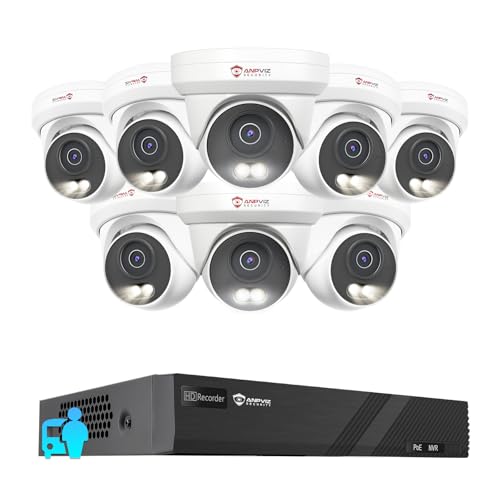
【8CH 6MP PoE NVR SYSTEM】8pcs 5MP PoE Turret cameras + 8 channel 6MP NVR+ 1pcs power cord + 1pcs USB mouse + 1pcs user manual + 8pcs 65ft Ethernet cables. This 5mp poe wired security camera system provides 24/7 reliable recording. Suitable for small business, garage, warehouse, retail, store or office indoor and outdoor use.
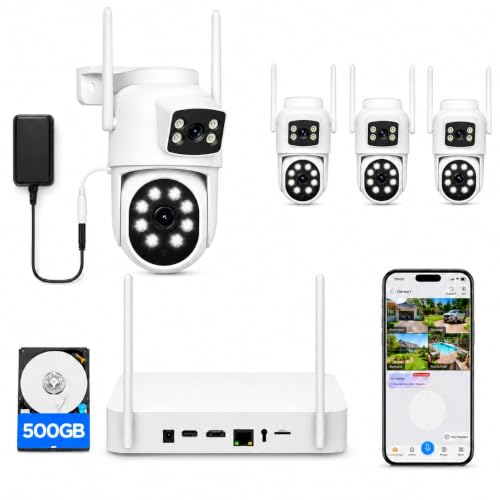
COMPLETE HOME SECURITY CAMERA SYSTEM WIRELESS OUTDOOR: 4 dual lens PTZ cameras, 10CH NVR with 500GB HDD (expandable to 6TB) — watch your front door, driveway, backyard and garage on one app or TV

【1 Device = 2 Cameras,2K Ultra HD Resolution & Color Night Vision】Security Cameras Wireless Outdoor has two lens. 2 lens view cover 360°,Each lens is 3MP/2K with sharper colors and details, allowing you to see everything that is happening within your surveillance area. One camera but function as 2. The camera is built-in 8 leds, the light could be set to motion triggle on or always on at night or close,and when the lights are on at night, extraordinary color night vision adds a glow to every dark night.
Frequently Asked Questions
How to Use Dual Recording?
To use dual recording, one should enable the feature in the system integration settings, select a storage location, and adjust recording preferences. Regular management of these settings guarantees ideal storage use and easy footage access.
Do Back up Cameras Prevent Accidents?
Backup cameras greatly contribute to accident prevention by providing extensive visibility, reducing blind spots, and enhancing situational awareness. Vehicles equipped with these systems show a marked reduction in backing-up accidents, promoting safer driving practices overall.
How to Record Two Cameras at the Same Time?
To record two cameras simultaneously, one must enable Camera Synchronization in each camera’s settings. This guarantees both devices capture footage together, maintaining synchronization while allowing users to select storage locations and customize recording profiles efficiently.
Can You Use Your Own Cloud Storage for Security Cameras?
Yes, users can utilize their own cloud storage for security cameras, provided the system supports cloud compatibility. This approach allows for automated backups, cost savings, and enhanced control over storage capacity and security features.