As an Amazon Associate, we earn from qualifying purchases. Some links on this site are affiliate links at no extra cost to you. Our recommendations are based on thorough research and editorial judgment.

What Is a Preamp and Why Do Podcasters Need One?

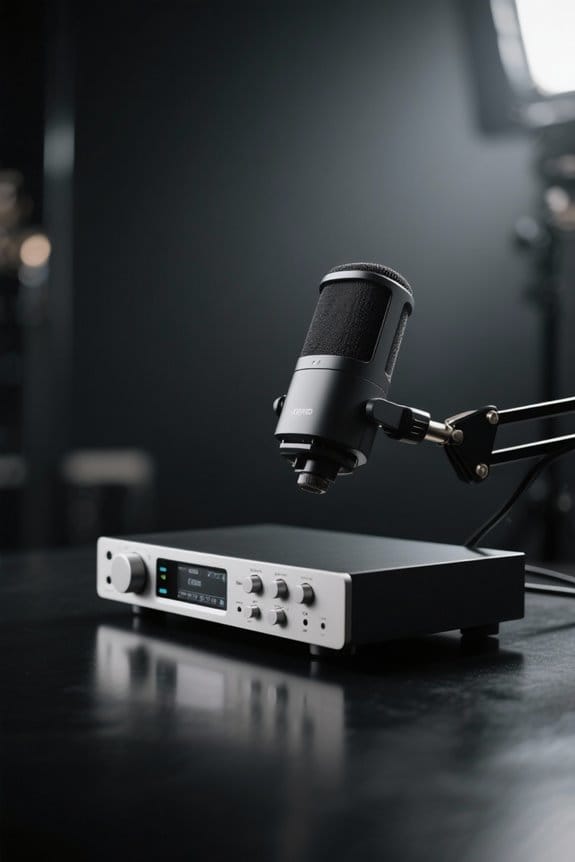
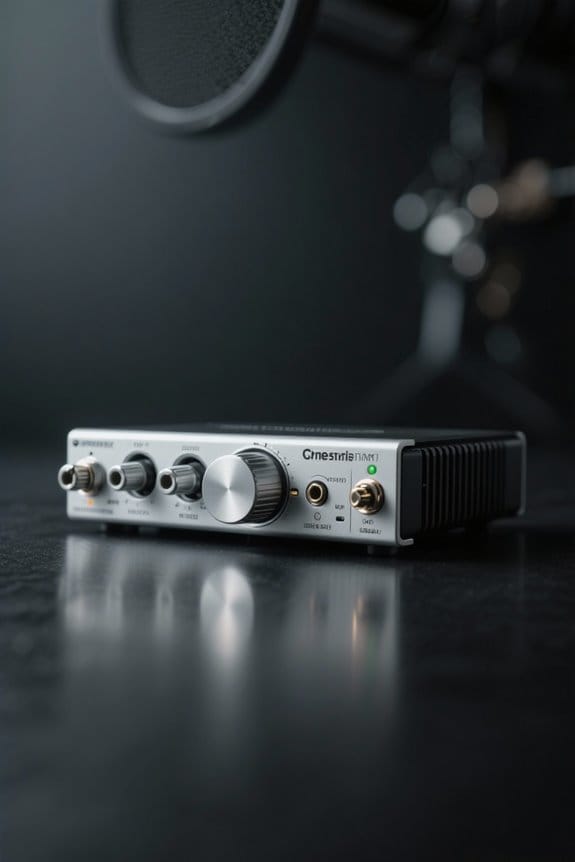
A preamp, short for preamplifier, boosts weak audio signals from microphones to line level. Podcasters need one because quality microphones, like the Shure SM7B, require about 60 dB of gain to sound their best. A good preamp reduces background noise, enhancing clarity and delivering a professional sound. Different types exist, like clean and colored preamps, each offering unique benefits. Curious about the best preamps for your setup? Let’s explore that next!
Key Takeaways
- A preamp boosts weak audio signals from microphones to a usable line level, essential for quality dynamic microphones in podcasting.
- They improve voice clarity by reducing background noise, optimizing audio quality for a professional podcast sound.
- Preamps come in clean and colored varieties, allowing podcasters to choose between transparency or warmth based on their recording needs.
- Dedicated preamps offer features like phase reversal and low cut filters, enhancing audio clarity and reducing noise during recording.
- Quality preamps outperform built-in audio interface preamps, ensuring better sound fidelity and overall podcast production quality.
Understanding Preamps: The Basics
Imagine trying to have a conversation in a crowded room. It’s tough to hear, right? That’s where preamps come in. A preamp, or preamplifier, takes weak audio signals from microphones and boosts them to line level, enhancing sound quality. For quality microphones like the Shure SM7B, you often need around 60 dB of gain, making a strong preamp crucial. Some preamps offer a clean sound, while others add warmth through harmonic distortion. Plus, dedicated preamps can reduce noise levels and even come with helpful features like phase reversal and low cut filters. Integrating a good preamp in your podcasting setup guarantees a clear and engaging signal, making you sound like a pro—even in that ‘crowded room’ of audio! Quality-focused podcasters often pair their preamps with multitrack recording capabilities to create more complex, professional-sounding arrangements.
The Role of Preamps in Podcasting
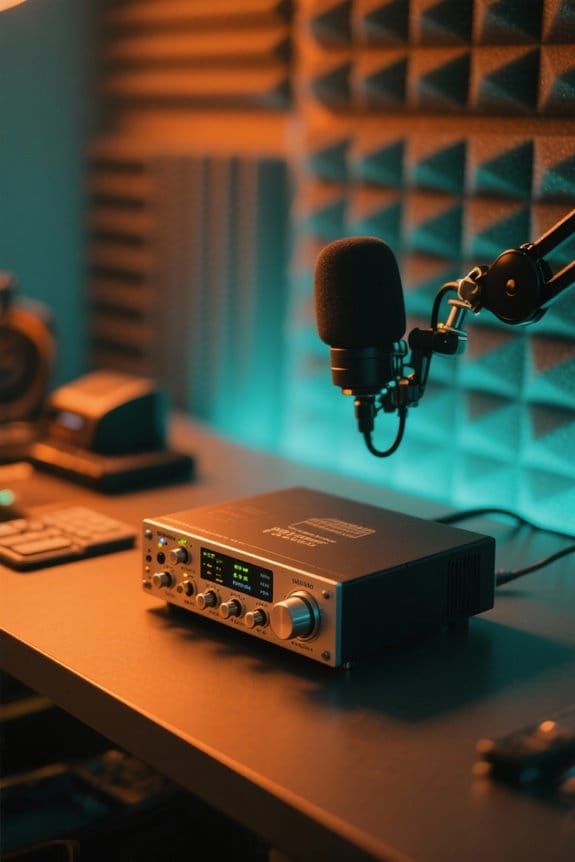
A good preamp is like a secret weapon for podcasters aiming for exceptional audio. It plays a crucial role in amplifying weak signals from microphones, making voices clearer and more professional. This is especially true for dynamic microphones, which often need that extra boost. When combined with audio interfaces in the signal chain, a quality preamp helps reduce background noise, keeping the focus on the speaker’s voice. There are different types, like clean and colored preamps, allowing podcasters to customize their sound. Opting for a dedicated external preamp over built-in options can drastically improve audio quality, especially at higher gain settings. So, whether you’re a novice or pro, investing in a solid preamp can take your podcast to the next level. Modern preamps with 32-bit/192 kHz converters deliver exceptional clarity and professional-grade sound quality for podcasting applications.
Benefits of Using a High-Quality Preamp

Quality audio is paramount in the world of podcasting, and using a high-quality preamp can make a world of difference. A good preamp not only adds high gain to low-output microphones, but it also enhances audio quality by reducing background noise. With a preamp to boost the signal, podcasters can capture clearer, more distinct sound. Plus, many high-quality preamps have features like low cut filters and phase reverse options, which offer even greater control over recordings. Investing in a reliable preamp often brings more noticeable improvements than splurging on an expensive microphone. Think of it as the unsung hero of audio gear — modest but essential. So, don’t skip it; your podcast deserves the best foundation for success! Modern preamps like the Focusrite Vocaster Two deliver 70dB gain levels for optimal microphone performance in professional podcast recordings.
Types of Preamps Suitable for Podcasters

When it comes to choosing a preamp for podcasting, understanding the different types can be a game-changer. Clean preamps are perfect for podcasters who prioritize audio clarity; they enhance voice reproduction without adding unwanted color. Tube preamps, on the other hand, offer a warm, rich sound that many find irresistible for that engaging vibe. Solid-state preamps deliver consistent performance with minimal noise—ideal for a professional finish. Don’t forget about in-line preamps, like the TritonAudio FetHead, which boost gain without needing extra space or extra units—talk about convenient! And if you’re recording straight to a computer, USB preamps are your best buddies for easy software integration and essential gain control. Choose wisely, and your podcast will shine! For optimal recording quality, look for preamps that can handle 1536kbps stereo sound to ensure professional-grade audio capture.
Recommended Products

Bundle Items Include: RODE RODECaster Pro II + 4x Headphones + 4x Podcast Microphone + 64GB Micro SD Memory Card + 2x USB-C + Cable Ties + Mic Cleaner + Headphone Cleaner + Microfiber Cloth

Items In Bundle Include: RODE RODECaster Video All-in-One Production Console, 64GB Memory Card, XLR Cable, Cable Ties, HDMI Cable, 1/4 TRS Cable, Microfiber Cloth

Designed for maximum versatility making it perfect for live sound, home recording, content creation, and live streaming.
Clean vs. Colored Preamps: What’s the Difference?

Audio quality matters, and for podcasters, selecting the right preamp can make all the difference. Clean preamps offer a transparent boost to audio signals, minimizing harmonic distortion. They’re perfect for capturing vocals and instruments without altering their natural sound. On the flip side, colored preamps add unique tonal characteristics, enhancing sound quality and giving recordings a more engaging vibe. Think of them as seasoning for your audio! Generally, clean preamps shine in recordings meant for heavy post-processing, while colored preamps add warmth and personality. Tube preamps deliver that rich warmth many love, while solid-state models offer a crisper, cleaner output. Ultimately, it boils down to the sound outcome you desire. Choose wisely; your audience is listening! Popular models like the Coda MB-Stealth offer an impressive -70 dB noise rating for crystal-clear podcast recordings.
Recommended Products
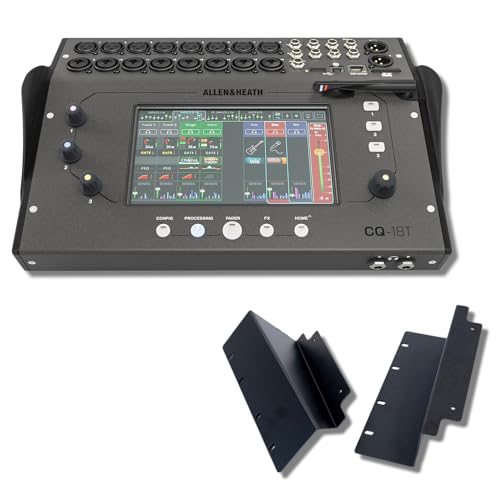
RACK-MOUNT DIGITAL CONSOLE — CQ-18T MIXER + OEM 19-INCH RACK KIT INCLUDED: Building a permanent install rack needs more than the mixer alone — you need OEM-certified rack ears that bolt cleanly to the chassis, the right footprint to keep power and headphone jack accessible, and confidence in a manufacturer-tested fit. This bundle pairs the Allen & Heath CQ-18T with the AH-CQ18T-RK19 19-inch rackmount kit. Pro AV integrators, school auditoriums, and worship install teams — rack-mount the mixer cleanly today.

Four ultra-low-noise Kashmir microphone preamps with adjustable limiters capture high quality audio in the field, on set, or with a computer. Choose bit depths from 16 to 32-bit float, and sampling rates from 44.1 kHz to 192 kHz.

Twin-Finity Tone-Blending Mic/Line Preamp & Hi-Z Instrument DI
Choosing the Right Preamp for Your Setup
Choosing the right preamp can feel like an intimidating task, especially with so many options out there. First, consider your microphone type; dynamic mics typically need a preamp with a lot of gain—around 60 dB minimum. Look for preamps that offer at least 70 dB, especially for low-output mics like the SM7B, to guarantee clean sound quality without noise interference. If hosting guests is in your plans, a dual-channel preamp will give you flexibility for multi-person recordings. Plus, remember the importance of a lower noise floor; it enhances clarity, which is crucial for vocal podcasts. Don’t forget cool features like pad switches—these can make all the difference! If you need help selecting, just plunge into your needs. For optimal recording quality, ensure your preamp includes zero-latency monitoring capabilities to prevent audio delays and echo during sessions.
Recommended Products

👍 ES9039SPRO X 4 ▶️ Adopting 4 pieces of Ess flagship chip Es9039SPRO for decoding two pieces per channel to form a fuly balanced architecture, completely independenf power supRly, independent grounding, to obtain the best perterance.

Class-leading AD-converter resolution with a dynamic range of 136 dB

DAC-Z10 is a high-resolution audio dac and headphone amplifier. Designed to “rediscover the true sound”, it employs precision engineering to reconstruct the signal path and refines every detail with musical warmth, bridging digital and analog with precision.
Preamps and Microphone Compatibility
Understanding how preamps work with various microphones can really enhance your recording game. Preamps are essential for connecting different mic types, like dynamic or condenser, to audio interfaces. They boost low-level signals to line level, which is important for clear audio. For example, the Shure SM7B needs about 60 dB of gain, so podcasters should choose preamps that supply enough power. Some built-in preamps may not cut it, leaving you frustrated. Additionally, condenser mics require phantom power, adding another layer to microphone compatibility. If you’re feeling a bit fancy, modular preamps like the API 500 Series let you customize your setup for your specific microphones. Who doesn’t like options? Compatibility is key for stellar recordings! Modern noise reduction chips in wireless microphones can help ensure your preamp receives the cleanest possible signal for processing.
Recommended Products


DuoPre XLR Microphone preamps, including 48V Phantom power for condenser microphones and up to 69dB of gain. Each preamp uses two gain stages to provide a full and accurate sound across the entire gain range with enough power for even the most gain hungry mics.

8 award-winning Midas PRO mic preamps and 8 Midas PRO outputs onboard
How Preamps Enhance Audio Quality
While it might seem trivial, the role of preamps in audio quality is anything but mundane. Preamps boost low-level microphone signals, providing the necessary gain for clearer recordings. For podcasters using dynamic mics like the SM7B, this is essential. High-quality preamps improve clarity and presence, making voices sound richer and more engaging. They also offer a transparent sound that’s perfect for post-processing. Fundamentally, a good preamp can elevate a microphone’s output, often influencing the final product more than the mic itself. Plus, preamps with lower noise floors help lift the signal above unwanted background noise, critical for high-fidelity audio. So, don’t underestimate the power of a good preamp; it’s a game-changer for audio excellence! Much like how voltage regulation features protect sensitive electronics from power fluctuations, preamps help stabilize and optimize audio signals for consistent, professional-quality sound.
Common Misconceptions About Preamps
Preamps often get a bad rap when it comes to audio quality. Many people mistakenly believe these preamplifiers can fix poor recordings, but they only enhance good signals. The source audio is what really matters. Additionally, not all microphones can connect directly to speakers. Most require a preamp to boost weak signals to line level.
Some podcasters think expensive preamps will magically improve your sound quality, but a high-quality microphone often has a bigger impact. Then there are built-in preamps in audio interfaces. While convenient, dedicated external preamps usually outperform them, especially at higher gain settings. Remember, not all preamps function the same; they vary greatly in coloration and noise floor, so choose wisely! The Shure SM7dB comes with a built-in preamp that delivers professional-grade signal boosting without requiring additional equipment.
Recommended Preamps for Podcasters
For podcasters looking to enhance their audio experience, choosing the right preamp can make a world of difference. The Focusrite Scarlett OctoPre is a popular model, providing eight channels of clean gain and professional sound quality, all at an affordable price. For those on the go, the Shure MVi, a compact digital preamp, easily connects via USB or Lightning to mobile devices. Meanwhile, the ART Tube MP Studio V3 is loved for its warm tube sound, perfect for vocal recordings. Additionally, the Cloud Microphones Cloudlifter CL-1 boosts dynamic microphones’ gain by up to 25 dB without the added noise. Ultimately, the PreSonus AudioBox USB 96 offers user-friendly audio interfaces for podcasters seeking versatility in their setup. Like modern monitor arm mounts, proper preamp positioning helps maintain an organized workspace while ensuring easy access to controls and connections.
Recommended Products

Eight ultra-low-noise Kashmir microphone preamps with adjustable limiters capture high quality audio in the field, on set, or with a computer. Choose bit depths from 16 to 32-bit float, and sampling rates from 44.1 kHz to 192 kHz.
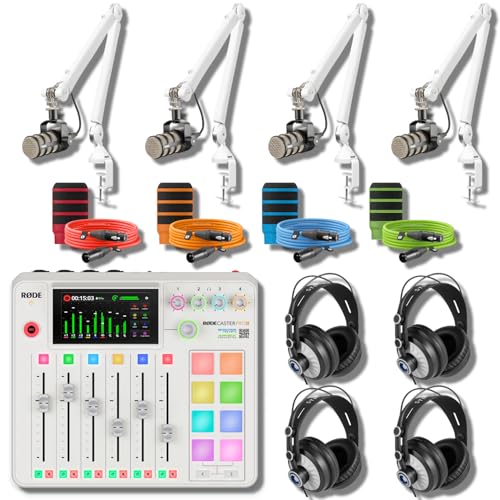
Fully integrated audio production studio for streamers, podcasters, musicians and content creators

FLAGSHIP SOUND QUALITY: Get the sound of Symphony Mk ii right on your desk with our legendary A/D and D/A conversion that delivers ultra-low distortion and provides a transparent window into the sonic landscape of your mix and recordings.
Frequently Asked Questions
What Is the Point of a Preamp?
A preamp serves to enhance audio signals during the amplification process, ensuring improved sound quality for recording equipment. This enhancement is critical for achieving clarity and richness in audio recordings, especially with low-output microphones.
Do I Need a Preamp for Podcasting?
A preamp is often necessary for podcast audio, as it optimizes recording quality by boosting signal levels. Different microphone types may require varying degrees of amplification to guarantee clear, professional sound in recordings.
What Happens if I Don’t Use a Preamp?
Neglecting to use a preamp typically results in compromised audio quality, as weak signals lack proper signal amplification, forcing dependence on equipment alternatives. Consequently, recording techniques may fail to capture nuances, leading to lower production standards.
How Do You Tell if You Need a Preamp?
To determine the need for a preamp, assess the recording setup for signal strength and audio quality. Equipment compatibility also plays a role; inadequate gain from an interface often necessitates a dedicated preamp for peak performance.