As an Amazon Associate, we earn from qualifying purchases. Some links on this site are affiliate links at no extra cost to you. Our recommendations are based on thorough research and editorial judgment.


The Role of Limiting in Podcast Audio Mastering

Limiting plays a key role in podcast audio mastering. It keeps sound levels consistent and prevents unpleasant distortion from clipping. By setting a maximum output ceiling around -1 dB, limiters guarantee your podcast stays loud enough without the risk of startling listeners. Aim for an integrated loudness of -16 LUFS for a polished sound. Knowing the right settings—like attack and release times—can elevate your audio quality even more. Stick around to uncover more tips to enhance your podcasting game!
Key Takeaways
- Limiters prevent audio clipping by setting a ceiling on peak levels, ensuring clarity and preventing distortion in podcast productions.
- Maintaining an output ceiling of -1 dB helps achieve loudness standards while preventing unexpected volume spikes during playback.
- Effective limiting enhances perceived loudness and dynamics, targeting an integrated loudness of around -16 LUFS for listener engagement.
- Key limiter parameters like Attack, Release, and Threshold must be carefully adjusted based on the audio content to achieve optimal results.
- Using brickwall limiters on the master bus ensures audio fidelity across different playback systems, delivering a consistent experience for listeners.
Understanding Audio Limiting in Podcasts
Imagine listening to your favorite podcast, and suddenly, the host’s voice blasts through the speakers, causing you to jump in surprise. This jarring moment isn’t just shocking; it’s often due to poor audio mastering. A limiter plays an essential role in podcast production, ensuring sound quality by keeping audio levels in check. Typically set to engage just below the loudest peaks, the limiter uses gain reduction of about -1 dB to -2 dB. This helps maintain loudness without losing the natural flow of spoken dialogue. By adhering to loudness standards, like -16 LUFS, podcasters can prevent distortion and create a smooth listening experience. After all, nobody wants a podcast that threatens to shatter eardrums, right? Using high-density acoustic foam in your recording setup can further enhance sound clarity by reducing unwanted background noise and echoes.
The Importance of Preventing Clipping

Clipping can be the bane of audio quality in podcasting. It occurs when audio signals exceed their maximum threshold, leading to distorted sound that annoys listeners. Preventing clipping is crucial for maintaining clarity and guaranteeing a pleasant experience. Limiting plays a key role here, as it sets a ceiling on audio levels, usually between -1 to -2 dB. This helps catch those pesky peaks before they reach digital distortion territory. Using true peak limiting technology is also essential; it guarantees audio fidelity across different playback systems. By applying limiting consistently, podcasters can enhance perceived loudness without sacrificing sound quality. So, whether you’re on Spotify or Apple Podcasts, keep your audio crisp and clean—your audience will thank you! Modern USB microphones with 192kHz sampling rates deliver exceptional audio clarity when combined with proper limiting techniques.
Enhancing Perceived Loudness
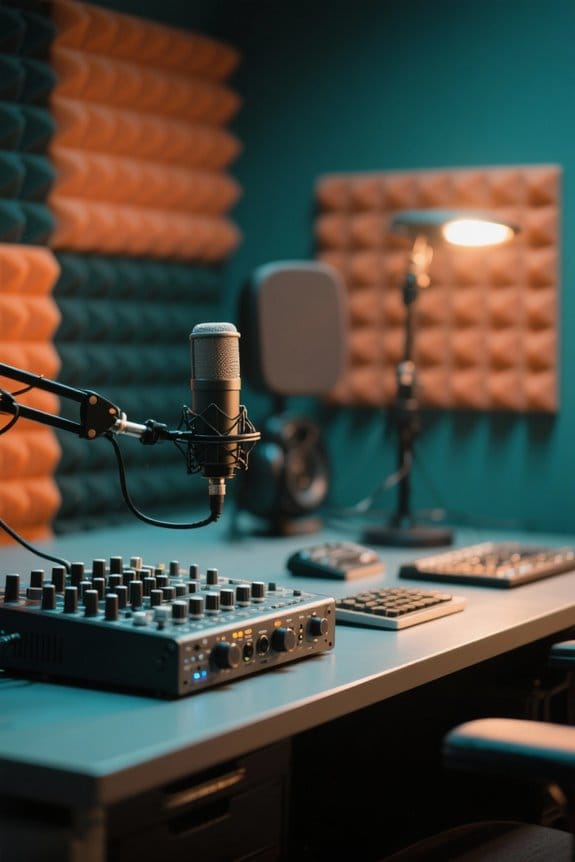
Mastering audio isn’t just about keeping things clean—it’s also about making your podcast sound engaging. Limiters play a key role in enhancing perceived loudness. They control peak levels, keeping audio under a specific decibel threshold. This guarantees a consistent listening experience across various platforms. By using a brickwall limiter on the master bus, podcasters manage peaks and maintain audio integrity, which prevents clipping like a pro. The ideal gain reduction typically sits between -1 to -3 dB—a sweet spot to balance loudness and dynamic range, boosting audio impact without sacrificing quality. Aim for an integrated loudness target of around -16 LUFS. With smart limiting, podcasts can sound denser and more cohesive, allowing all those dynamic moments really shine. Using a cardioid pickup pattern helps capture cleaner audio signals before applying limiters, making the mastering process more effective.
Navigating Loudness Standards for Podcasts
When it comes to podcast audio, loudness standards can feel like traversing a maze—confusing but significant. Aiming for an integrated LUFS of -16 to -18 guarantees a pleasant, consistent listening experience across various streaming platforms. Remember, services like Spotify normalize to -14 LUFS, while Apple Music sticks to -16 LUFS. This makes sticking to these levels crucial. It’s equally important to guarantee no clipping by keeping your loudest peak at -1 dBFS during audio production. Applying brickwall limiting, reducing peaks by about -3 dB, can help meet these loudness standards. By mastering these technical details, podcasters can avoid sudden volume jumps that annoy listeners, enhance audience retention, and ultimately sound more professional. Using a zero-latency monitoring setup through modern audio interfaces ensures you can make real-time adjustments while maintaining precise control over your loudness levels. Happy mastering!
Key Parameters of Limiters
Limiters are essential tools in podcast audio mastering, shaping sound while keeping everything within desired loudness levels. When mastered correctly, key parameters such as Attack, Release, Ceiling, and Input Gain play vital roles. The Attack setting dictates the limiter’s speed in reacting to peaks, where faster settings suit drums and slower ones are better for vocals. Release controls how quickly the limiter stops processing once the audio signal dips, enhancing blend and transparency. The Ceiling parameter sets a maximum output level, preventing digital clipping in the final mix. Finally, Input Gain adjusts the signal level entering the limiter, fine-tuning perceived loudness while maintaining the dynamic range. Similar to motion sensor lighting, these parameters automatically respond to audio signals to maintain optimal levels. Mastering these elements can elevate your podcast’s audio experience!
Recommended Products

Sound better than ever with Air on 18i8’s four mic pres

One unbalanced aux level output (Phono connector)
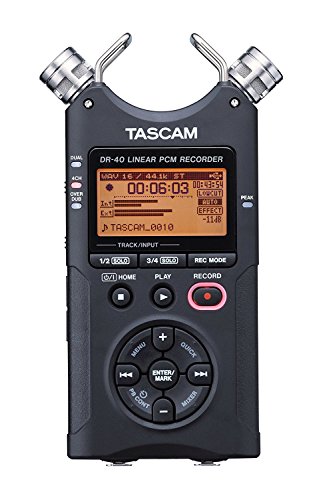
Discontinued Model Replaced by New & Improved DR-40X
The Impact of Limiters on Audio Quality
While an enchanting podcast needs great content, audio quality is equally important to grab and keep listeners’ attention. Limiters play an essential role in this respect, ensuring that audio signals don’t exceed a specified output level. By employing a brickwall limiter, podcasters maintain audio integrity, stopping any potential clipping, especially in digital formats. Adjusting the limiter’s output ceiling to around -1 to -2 dB maximizes loudness while preserving dynamic range, helping to meet platform loudness requirements. During the mastering process, effective limiting boosts perceived loudness without sacrificing quality. Plus, keeping an eye on true peak levels helps avoid inter-sample clipping, allowing for a consistent, professional listening experience across varying playback systems. No one wants their podcast to sound like a can of soda! Using an interface with zero-latency monitoring capabilities ensures you can hear these limiting adjustments in real-time while recording.
Strategies for Effective Limiting
Effective limiting gives podcasters an edge in delivering great audio. To nail this, set the limiter threshold just below the loudest peaks, aiming for -1 to -2 dB of gain reduction. This keeps your audio levels balanced and maintains clarity—nobody wants distorted sound! Use a true peak limiter to catch those pesky inter-sample peaks, ensuring your audio stays within the 0 dBFS limit. For the overall loudness, targeting around -16 LUFS strikes a perfect balance between loudness and dynamic expression, creating an ideal listening experience. Adjust your limiter’s release time wisely—faster for percussive hits and slower for vocals—to retain natural dynamics. And hey, don’t forget to monitor your audio levels regularly; even pros need a reference point now and then! Like energy-efficient LED strips, good limiting practices help maintain consistent output while minimizing power consumption and distortion.
Recommended Products

A powered subwoofer that can be used in a variety of portable and permanent applications

A powered subwoofer that can be used in a variety of portable and permanent applications
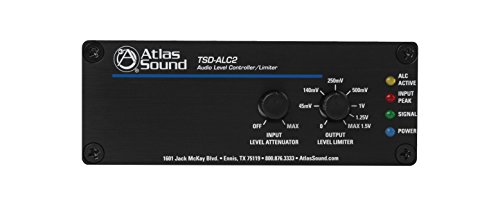
Stereo auto level Control - unbalanced RCA input and output
Limiting Techniques for Different Platforms
When it comes to mastering podcasts, the approach can vary greatly depending on where the content will be shared. For platforms like Spotify and Apple Music, targeting around -16 LUFS guarantees consistent loudness and quality. Limiters play an important role, helping avoid distortion while allowing loudness increases. A typical gain reduction of -1 to -2 dB on tracks maintains clarity. Setting the output ceiling at -1 dB is vital to dodge inter-sample clipping, preserving audio fidelity. Quick adjustments on attack and release times can manage vocal peaks more effectively. Plus, monitoring true peak levels helps maintain high-quality files tailored for each platform’s loudness normalization standards. Mastering isn’t as intimidating as it sounds; it’s just a matter of finding the right balance! Using a microphone with cardioid pickup patterns helps capture cleaner audio by reducing unwanted background noise during the initial recording phase.
The Relationship Between Limiting and Dynamics
Limiting plays an essential role in mastering podcast audio, especially in how it interacts with dynamics. By setting a maximum output level, limiting prevents distortion and clipping that can muddle dialogue. It enhances perceived loudness while keeping clarity intact—no one wants to struggle to hear the punchline! Typically, a limiter’s threshold sits just below the loudest peak, applying a gain reduction of about -1 to -2 dB. This smart approach allows for natural dynamic expression without sacrificing audio levels. True peak limiters are great for catching those sneaky inter-sample peaks. Similar to how noise-canceling microphones help maintain audio clarity during live streams, proper limiting ensures consistent sound quality throughout your podcast. Ultimately, effective limiting strikes a balance between loudness and dynamics, ensuring a professional sound that keeps listeners engaged. After all, clarity’s key, right?
Common Mistakes When Using Limiters
While mastering audio for podcasts, many people overlook common mistakes that can seriously impact sound quality. Over-limiting can flatten dynamics, making the audio feel lifeless. Setting the output ceiling too high? That’s a recipe for inter-sample clipping and distortion, trust us, you want to avoid that. If release times aren’t adjusted, you might end up with awkward pumping effects, especially on vocal tracks—yikes! Ignoring target loudness levels, like aiming for -16 LUFS, could leave your podcast too quiet or annoyingly loud, risking listener retention. And don’t forget to monitor gain reduction; over-compression sacrifices the natural sound. The goal is loudness while preserving the essence of your final master, not turning it into a robotic monotone. Keep an ear out, folks! Modern USB lavalier microphones with high sampling rates of 192kHz can help capture clearer audio from the start, reducing the need for aggressive limiting during mastering.
Best Practices for Implementing Limiters
Overlooking the importance of limiters can lead to frustrating audio mishaps. A limiter is essential in podcast audio mastering, acting as a safety net to prevent clipping. It’s best to set the threshold slightly below the loudest peak, generally targeting a -2 to -3 dB gain reduction. This strategy optimizes loudness without introducing distortion.
Using a true peak limiter helps catch inter-sample peaks, thereby maintaining robust audio integrity across various playback systems. Plus, don’t forget about adjusting release times! Fast settings work well for instruments, while slower ones are better for vocals. Regularly monitor your loudness levels in LUFS to guarantee consistent quality across streaming platforms, making your listeners feel right at home. Audio mastering isn’t just science; it’s an art!
Recommended Products

Fits perfectly under a DSLR camera rig, without relying on bulky recorders or the limits of the camera’s microphone in

One Mic, Four Forms: BOYA Magic wireless microphones brings together a lavalier microphone, handheld mic, desktop microphone, and camera microphone in one compact design. Take your studio on the road — as easy to carry as slipping a marker into your bag.⚠️ STAND NOT INCLUDED

Professional bus-powered USB-C-compatible dynamic microphone for vocal recording, podcasting, streaming, vlogging, gaming, and more
Tools and Plugins for Limiting Audio
When it comes to enhancing podcast audio, selecting the right tools and plugins for limiting can feel a bit like maneuvering through a maze. Key options include basic DAW limiters and powerful third-party plugins like FabFilter Pro-L 2 and Waves L2 Ultramaximizer. These tools help manage loudness while guaranteeing clarity. A brickwall limiter is essential, preventing any signal from exceeding the threshold and guaranteeing every note rings true. It’s advisable to set the output ceiling to -1 to -2 dB, which balances loudness without sacrificing audio quality. Monitoring loudness in LUFS ensures compliance with platform requirements, giving listeners a consistent experience. With the right limiter, your podcast audio will shine—just like you!
Frequently Asked Questions
What Does Limiting Do in Mastering?
Limiting in mastering optimizes loudness while controlling dynamic range, preventing audio clipping. By managing peak levels, it enhances sound consistency and mixing depth, providing a final polish that elevates the overall quality and listener experience.
Do Limiters Affect Sound Quality?
Limiters can both enhance and hinder sound quality. Proper limiter settings improve sound clarity and mix balance while ensuring audio fidelity. However, excessive use may compromise dynamic range and introduce unwanted audio compression, reducing overall peak reduction effectiveness.
How Much Should You Limit Your Master?
Mastering mandates mindful limiting techniques, achieving approximately -1dB to -2dB for dynamic range while balancing loudness levels. This aligns with industry standards, ensuring audio clarity, peak volume control, and enhancing track comparison within mastering goals.
Do Limiters Cause Distortion?
Limiters can cause distortion artifacts if improperly applied, affecting audio clarity and dynamic range. Mastering techniques must consider limiting effects to balance perceived loudness and manage digital limitations while addressing mixing considerations for peak sound quality.