As an Amazon Associate, we earn from qualifying purchases. Some links on this site are affiliate links at no extra cost to you. Our recommendations are based on thorough research and editorial judgment.

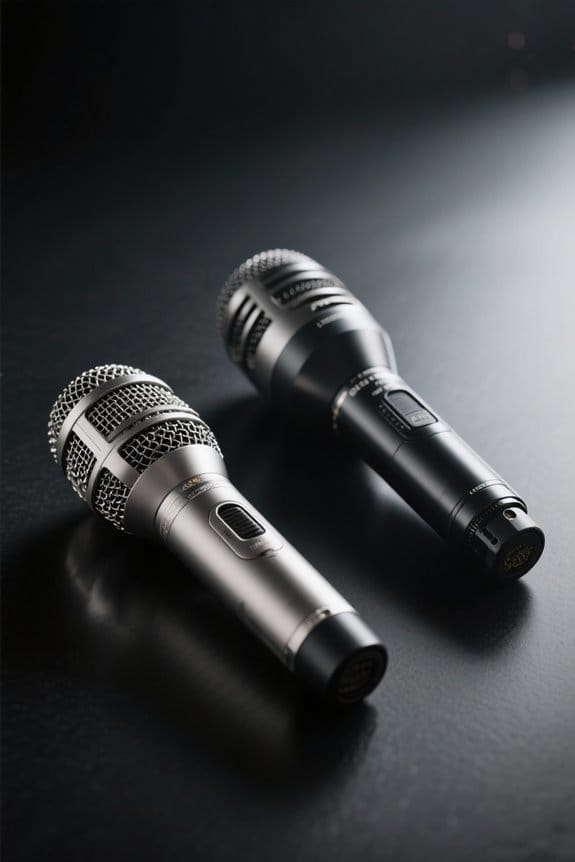
The Difference Between Dynamic and Condenser Microphones

Dynamic and condenser microphones serve different purposes in the audio world. Dynamic mics, like the Shure SM58, are tough and handle loud sounds well, making them great for concerts. On the other hand, condenser mics, such as the Neumann U87, are super sensitive and capture detailed sound, perfect for studios. So, if you want to rock out, go dynamic; if you’re recording soft whispers, grab a condenser. Stick around, and you’ll discover even more about choosing the right mic for your needs!
Key Takeaways
- Dynamic microphones are durable and ideal for live performances, while condenser microphones offer high sensitivity for studio recordings.
- Dynamic mics handle high sound pressure levels better, making them suitable for loud environments.
- Condenser microphones require external power (48V phantom power) and offer various polar patterns for recording flexibility.
- Dynamic mics typically have cardioid or supercardioid patterns, reducing side noise effectively.
- Selection depends on the environment: dynamic mics suit noisy settings, while condensers excel in quieter, controlled spaces.
Understanding Microphone Diaphragms
Microphone diaphragms play a starring role in sound recording. This thin membrane vibrates in response to sound waves, transforming acoustic energy into an electric signal. In dynamic microphones, the diaphragm is attached to a coil, generating voltage within a magnetic field. Meanwhile, condenser microphones feature a more sensitive diaphragm, which requires external power and alters capacitance when sound waves move it near a charged backplate. The size of the diaphragm matters too; small ones excel at high frequencies, while larger diaphragms offer broader sound capture and fuller tones. A microphone’s frequency response and sensitivity highly depend on the diaphragm’s materials and construction, determining the overall sound quality and polar pattern. It’s like choosing a roadster versus a family SUV for your audio journey! Modern supercardioid pattern microphones utilize specialized diaphragm designs to effectively eliminate background noise and ensure crystal-clear recordings.
Exploring Dynamic Microphones
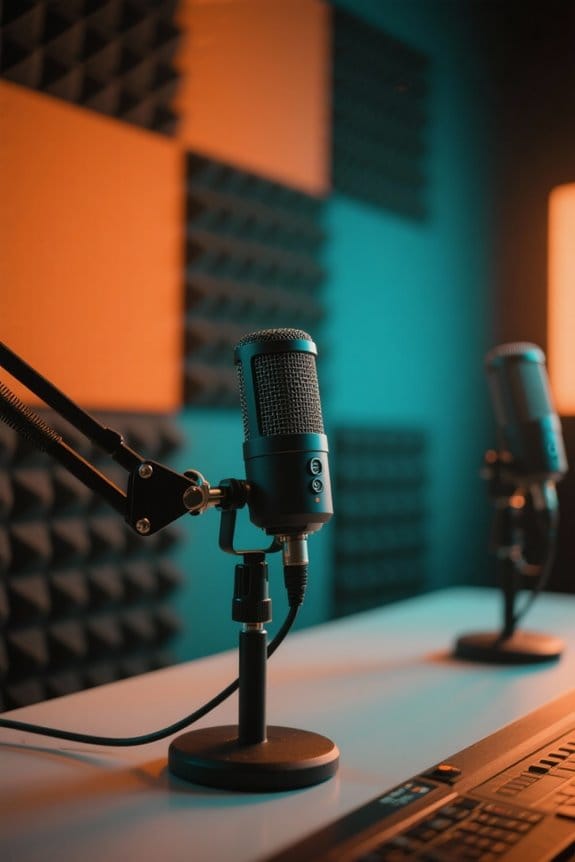
When deciding on a microphone for live performances or studio recordings, dynamic microphones often stand out as a top choice. These mics convert sound waves into electrical signals using a diaphragm and a coil of wire in a magnetic field, excelling in high sound pressure scenarios without distortion. They’re incredibly durable, making them perfect for loud environments, like concerts or recording brass instruments. Dynamic microphones usually feature cardioid or supercardioid polar patterns, focusing on sounds from the front while minimizing side noise—no one wants feedback, right? Plus, unlike condenser mics, they don’t need external power, so they’re hassle-free. Popular models include the Shure SM58 for vocals. Just remember, with a dynamic mic, you’re always ready for the show! For optimal audio clarity in noisy settings, many performers pair dynamic mics with noise-cancelling technology commonly found in modern lavalier systems.
Recommended Products

Cardioid Condenser Microphone


Excellent feedback rejection
Exploring Condenser Microphones
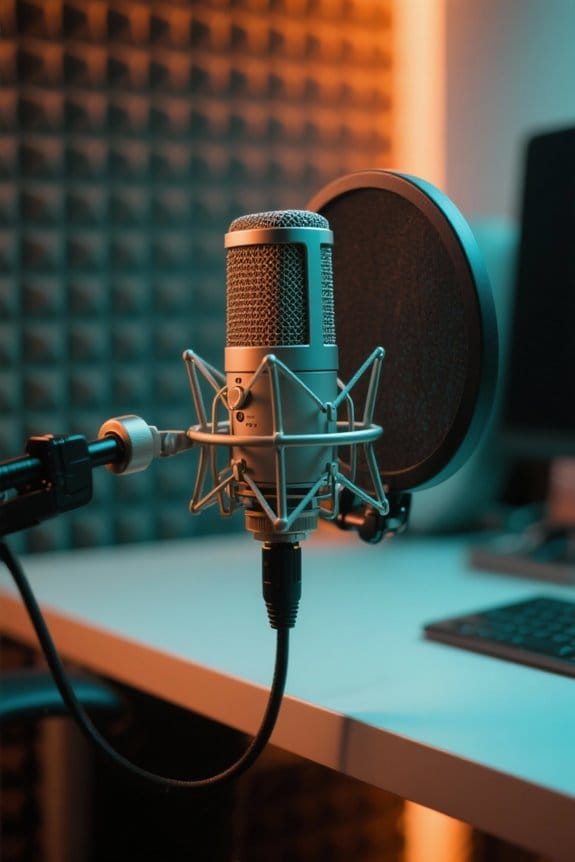
While dynamic microphones excel in loud environments, condenser microphones shine in more delicate, nuanced settings. These mics have a diaphragm that sits near a charged backplate, giving them high sensitivity to sound. They require 48V phantom power, which might sound fancy, but it’s just how they get their groove. Ideal for studio environments, condenser microphones, like the Neumann U87 and Audio Technica AT2020, capture fine details in vocals and instruments. Their varied polar patterns let you adjust sensitivity for different recording scenarios, ensuring every note is heard. So, whether you’re laying down a soothing track or capturing a lively performance, condenser mics are the go-to choice for those wanting to catch it all—details and all! Like modern USB-C connectivity, which offers speeds up to 2,100MB/s in storage devices, condenser microphones represent the cutting edge of audio technology.
Recommended Products

Circuit topology Four dual triode vacuum tubes (Sovtek 6922), high-voltage discrete Class A

For Recording Studios and Touring

Requires +48V phantom power
Key Differences Between Dynamic and Condenser Microphones
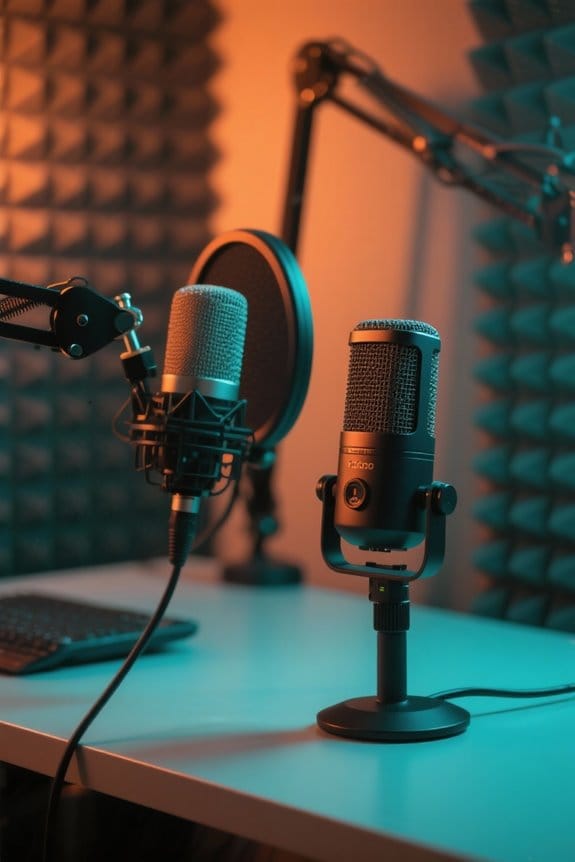
There are several key differences between dynamic and condenser microphones that can help users make the right choice for their audio needs. Dynamic microphones generate electrical current through magnetic induction, making them robust and great for high sound pressure levels. They excel in live settings, focusing sound from the front and reducing background noise with their cardioid polar patterns. In contrast, condenser microphones, which rely on an external power source or phantom power, boast higher sensitivity. This allows them to capture intricate details essential for acoustic instruments in quieter recording environments. They often come with multiple polar patterns for versatility. So, whether you want a mic that can handle a loud guitar amp or one that picks up the softest vocal nuances, the choice is clear! Modern clip-on microphones often utilize AI noise cancellation technology to achieve professional-grade sound quality in challenging environments.
Recommended Products

Large-diaphragm Cardioid Microphone in Wooden Jeweler's Box with 20Hz-20kHz Frequency Range

Pre-polarized Sub-miniature Cardioid Earset Condenser Microphone with 100mm Boom MicroDot Connect - Beige

Dual-ear Headwn Condenser Cardioid Microphone with 3.9'
Use Cases for Dynamic and Condenser Microphones
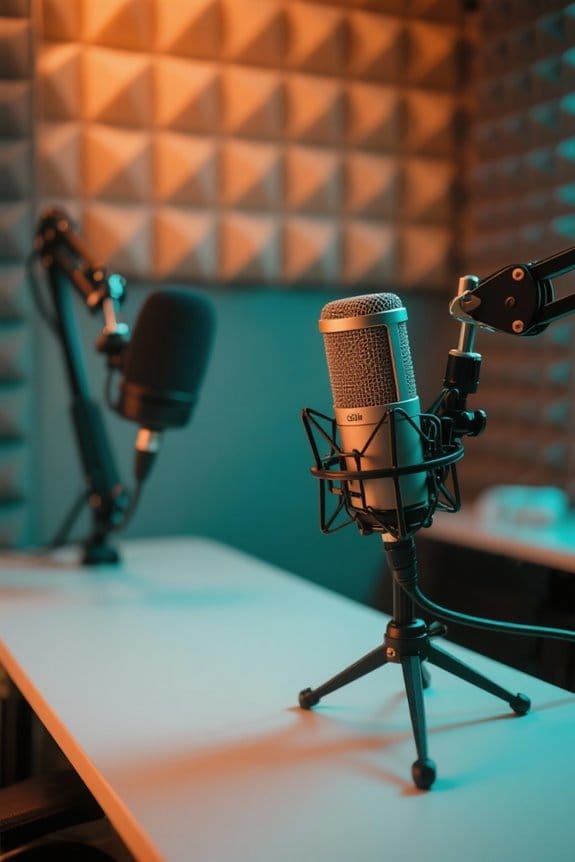
Choosing the right microphone can feel like a challenging task, but understanding the use cases for dynamic and condenser mics makes it much easier. Dynamic microphones excel in live settings, handling loud sources with impressive sound pressure levels and great background noise rejection. They’re often the go-to for concerts or events. In contrast, condenser microphones shine in studio environments, perfect for recording vocals and acoustic instruments. They capture subtle details that bring sounds to life. Podcasters often lean toward dynamics for noisy spaces, while condensers help bring clarity in quieter settings. For field recording, condensers are sensitive to delicate sounds, but if conditions get tough—like at a concert—a dynamic mic will have it covered. Much like closed-back headphones, both types of microphones provide excellent sound isolation, making them ideal for focused audio capture in their respective environments.
Choosing the Right Microphone for Your Needs
How does one decide between a dynamic and a condenser microphone? Choosing the right microphone boils down to your needs and environment. Dynamic microphones thrive in live settings, handling high sound pressure levels like a champ. They’re tough, making them perfect for noisy places. Conversely, condenser microphones shine in studios, thanks to their high sensitivity and ability to capture fine details, like that subtle vocal quiver. If you’ve got a loud audio source, go dynamic for better background noise rejection. Budget matters too! You can snag a good dynamic mic for about $99, whereas a high-end condenser can cost a staggering $3,650. So think about your recording environment and wallet when making your choice—your sound will thank you! For optimal vocal clarity, modern condenser microphones achieve signal-to-noise ratios up to 58 dB, ensuring professional-grade audio capture.
Frequently Asked Questions
Which Is Better, a Condenser or a Dynamic Mic?
The choice between a condenser mic and a dynamic mic hinges on performance needs: condenser mics excel in studio recording techniques for atmosphere capture, while dynamic mics offer durability and are preferred for live sound applications and vocal recording preferences.
What Are the Disadvantages of Dynamic Mics?
Dynamic microphones exhibit lower microphone sensitivity, poorer sound quality, and limited frequency response. They face portability issues and durability concerns, struggle with ambient noise in quiet environments, and may require greater power with notable weight differences impacting usage environments.
Do Singers Use Condenser or Dynamic?
Singers often choose condenser microphones for studio recordings, valuing vocal clarity and sensitivity in controlled acoustic environments. In contrast, pop vocalists frequently opt for dynamic mics during live performances due to their durability and sound pressure handling capabilities.
What Are Dynamic Microphones Best Used For?
During a live concert, a band relies on dynamic microphones for their durability, effective sound isolation, and feedback rejection. They serve well in recording vocals and instrument amplification, fitting various budget considerations and portability options in podcasting equipment.


