As an Amazon Associate, we earn from qualifying purchases. Some links on this site are affiliate links at no extra cost to you. Our recommendations are based on thorough research and editorial judgment.


DIY Acoustic Treatment Solutions for Home Podcast Studios

Creating a great podcast studio at home doesn’t have to break the bank. For little to no budget, try moving your speakers away from walls and using soft items like blankets or pillows to absorb sound. A DIY panel can be made with wood and fabric for under $500, and a good-quality rug can cost around $100. Want to learn about more advanced techniques and products? There’s plenty more to explore!
Key Takeaways
- Move speakers away from walls to reduce sound reflections and improve audio clarity.
- Create an equilateral triangle between your speakers and listening position for optimal sound balance.
- Use soft items like blankets and pillows for budget-friendly sound absorption solutions.
- Construct DIY acoustic panels using wood, fabric, and insulation material to enhance audio quality cost-effectively.
- Incorporate rugs and heavy curtains to minimize floor and window reflections, boosting your podcast’s sound quality.
Understanding Sound Treatment and Soundproofing
When diving into the world of sound treatment and soundproofing, many folks confuse the two, but they’re quite distinct. Soundproofing is all about keeping outside noise out. Think of it like a cozy blanket for your room. On the flip side, sound treatment enhances audio quality within that space by minimizing pesky echoes and reverberations. For example, foam acoustic tiles are great for sound treatment, not soundproofing. They reduce reflections, ensuring your voice sounds clear and professional. To really nail that audio environment, a combination of absorption and diffusion techniques works wonders. Soft materials like carpets or curtains can help, while hard surfaces can throw things off. So, understanding both elements is key for any aspiring podcaster! Look for panels with NRC ratings above 0.9 to achieve the most effective sound absorption and echo reduction in your space.
The Importance of Acoustics in Podcasting

Acoustics can make or break a podcast, as they affect everything from voice clarity to listener engagement. Poor acoustics can turn high-quality recordings into muddy messes. This happens when sound bounces off hard surfaces, creating echoes you don’t want. Luckily, there are several acoustic treatment options to improve your space. Heavy curtains, carpets, and DIY acoustic panels can absorb unwanted sound effectively. Just imagine transforming your echo chamber into a cozy sound haven! Regularly updating your acoustic treatment as your needs evolve can lead to continuous audio enhancement. Whether you’re podcasting from your living room or a spare bedroom, investing time in acoustics is essential for delivering that professional sound listeners crave. Your audience will thank you! High-density foam panels are particularly effective for sound absorption and can significantly improve your podcast audio quality.
Identifying Sources of Reverb in Your Space

Sound reflections can turn any cozy space into an echo chamber, and that’s not what podcasters want. Reverb sneaks in from hard surfaces like bare walls, windows, and floors, making audio a jumbled mess. To tune your space, start by identifying first reflection points where sound bounces off nearby surfaces—this helps guide your acoustic treatment. Larger rooms mean longer reverb tails, so you might need more than a few acoustic panels. Even simple furniture can absorb sound, reducing reverb without breaking the bank. For example, plush couches or rugs can be far more stylish than you’d think! To sum it up, evaluating your space is key to achieving crisp, professional-sounding recordings, so put on your detective hat! Consider adding motion sensor lights to your recording setup for hands-free illumination during late-night podcast sessions.
DIY Acoustic Treatment With No Budget

Transforming a recording space into a sound-friendly environment doesn’t require splurging on fancy equipment. For those with zero budget, simple adjustments can work wonders. Start by moving your speakers away from walls—they’ll love the breathing room! Create an equilateral triangle between your speakers and listening position for clearer sound. Eco-friendly polyurethane foam panels offer superior sound absorption, but there are plenty of affordable alternatives. Next, gather soft items: blankets, pillows, and duvets. These everyday household items absorb sound, reducing reverb at no cost. Try hanging old comforters on walls or placing bags stuffed with clothes around the studio space; they act as makeshift sound absorbers. Finally, play around with your room layout to minimize reflections. With these DIY Acoustic Treatment Solutions for Home Podcast Studios, you’ll achieve professional audio quality without breaking the bank!
Cost-Effective Solutions for Acoustic Treatment Under $500
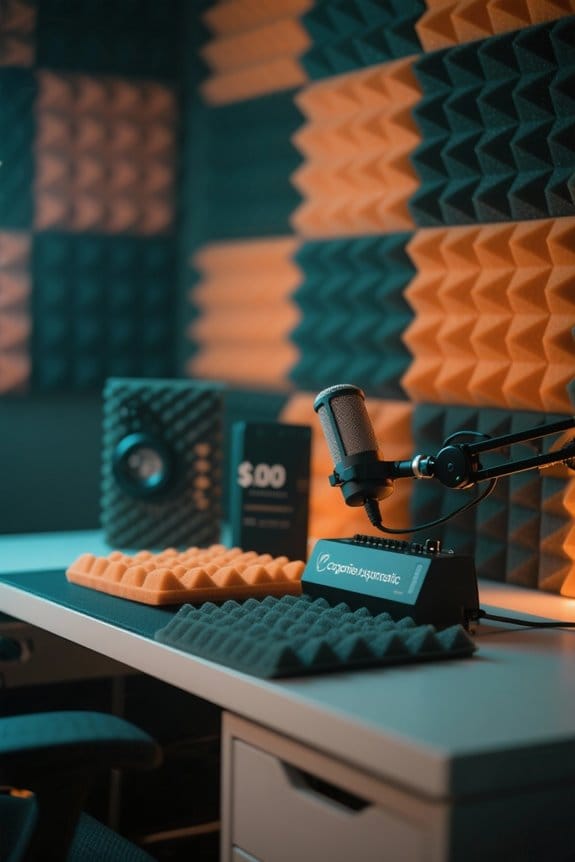
How can podcasters upgrade their recording spaces without going broke? Enter DIY acoustic panels! By combining wood, fabric, and sound-absorbing insulation, podcasters can create effective sound treatment under $500. For about $200, you can snag necessary tools; $50 on wood blocks; and approximately $250 on fabric and labor makes it all doable.
You can also explore online tutorials to build skyline diffusers alongside those panels for a personalized touch. Don’t forget a rug, roughly $100, to soak up sound and cut down on floor reflections. Adding acoustic blankets and drapes can further enhance your audio quality without breaking the bank. With a little creativity, podcasters can have a cozy sound studio that’s also budget-friendly! Remember to select materials with a high-density foam rating of at least 30 kg/m³ for optimal sound absorption performance.
Enhancements for Your Studio Under $1,000
Upgrading a podcast studio under $1,000 can yield impressive results without emptying the wallet. Investing in eco-friendly acoustic panels for about $450 will dramatically improve sound quality, especially when paired with bass traps to tackle those pesky low frequencies. Don’t forget a high-quality rug, which can be snagged for around $100; it’s fantastic for reducing reflections from hard floors. Mixing DIY acoustic panels, costing around $200 for materials, adds a personal touch. For tight spaces, consider hanging acoustic “clouds” above your recording area for essential sound isolation. Just remember, regular reassessment of your setup’s effectiveness can spark clever adjustments that fine-tune audio excellence, giving your home studio the sonic boost it needs. Happy recording! Look for panels with high NRC ratings above 0.9 to ensure maximum sound absorption effectiveness in your studio space.
Utilizing Furniture for Sound Absorption
Creating an inviting podcast studio doesn’t just rely on fancy gear; furniture can play a key role in absorbing sound. Soft furnishings, like couches and armchairs, absorb sound waves, reducing reflections and enhancing audio quality. Area rugs are perfect for adding warmth while muffling unwanted echoes. Did you know bookshelves filled with books? They effectively diffuse sound waves, cutting down on pesky echoes. Heavy curtains over windows provide both sound absorption and isolation, blocking external noise. Additionally, arranging furniture to create barriers can block direct sound paths, improving the studio’s acoustic environment. Throw in some wall art or fabric-covered panels, and you not only up the aesthetic appeal but also boost sound absorption—talk about multi-tasking! For maximum sound dampening effect, consider installing triple weave technology curtains that can block up to 99% of external noise while maintaining room temperature.
Strategic Placement of Acoustic Panels
Where should those acoustic panels go for the best sound? Start by positioning them at first reflection points. Think of these spots as if they were mirrors reflecting sound toward your recording position. Ideally, place acoustic panels at ear level to capture those pesky mid to high frequencies. Don’t forget to install bass traps in corners; they’re essential for keeping low frequencies in check—they tend to party too hard otherwise! Now, mixing those absorption panels with diffusers can be a game changer. They’ll scatter sound, preventing your room from sounding like a damp sponge. Finally, assess your setup regularly. If you change furniture, re-evaluate panel placement to guarantee your sound stays sharp. After all, it’s all about clarity! For optimal results, consider adding a reflection filter microphone to your setup, as these devices can reduce up to 87% of unwanted noise reflection.
Mobile and Temporary Acoustic Treatment Options
Although temporary acoustic treatment might sound like a challenging task, it’s actually quite simple and highly effective. Mobile acoustic panels are one great solution for on-the-go podcasting, as they’re lightweight and easy to set up. Furniture blankets, often from the film industry, also work wonders—they absorb sound and can be moved around quickly. Additionally, filling a room with soft furnishings like couches and curtains dramatically decreases sound reflections, transforming any space into a podcasting haven. DIY enthusiasts can hang thick blankets or comforters for instant sound barriers. Finally, repurposing bookcases or upholstered chairs can create a cost-effective shield against unwanted noise. Who knew soundproofing could be so flexible—and budget-friendly? Using high-density acoustic foam materials in your DIY solutions can eliminate up to 87% of ambient noise, making your temporary setup nearly as effective as professional equipment.
Recommendations for Professional Acoustic Products
Choosing the right professional acoustic products can make a world of difference in podcasting quality. To tackle echo and reverb, high-density fiberglass acoustic panels are a smart choice, proudly absorbing sound and refining your audio. Cloud panels, those cool hanging treatments, can cut down ceiling reflections—just what your recordings need for clarity!
For a more tailored approach, GIK Acoustics offers customized bass traps and diffusion panels that address specific challenges in your space, because every studio is unique.
Don’t forget about software like Sonarworks SoundID Reference, which can take your setup to the next level by calibrating sound. Investing wisely in these products is like giving your podcast a cozy blanket of sound—it just feels right! Using a power conditioner unit with your audio equipment can significantly reduce unwanted AC line noise and ensure cleaner recordings.
Ongoing Community Support and Resources for Improvement
When seeking ways to enhance podcast audio quality, engaging with communities can be incredibly valuable. Platforms like the Buzzsprout Podcast Community offer ongoing community support, where podcasters share insights and feedback on their DIY acoustic treatments. Members can discover affordable resources, such as Sonarworks software, which helps tailor sound profiles for around $99. Collaborating in discussions sparks creativity and inspires using everyday materials for sound absorption, proving that genius doesn’t need to break the bank. Plus, documenting progress encourages innovation—who doesn’t love showing off their latest acoustic panel? By tapping into shared tutorials and resources, podcasters can create tailored solutions for their studios, transforming any home setup into a sound haven without the big price tag.
Frequently Asked Questions
How Can I Determine the Ideal Placement for Acoustic Panels?
To determine ideal panel placement, one should identify first reflection points, ensuring panels are positioned at these locations. Utilizing a mirror test can aid in accurately spotting reflective surfaces to optimize sound absorption.
Will DIY Acoustic Treatments Affect My Room’s Aesthetics?
DIY acoustic treatments can considerably impact a room’s aesthetics, depending on the design choices. By exploring aesthetic solutions that blend functionality with visual appeal, individuals can enhance both sound quality and the overall look of their space.
How Can I Maintain My Acoustic Treatments Over Time?
Maintaining acoustic treatments involves routine checkups for dust and damage. Surprisingly, most forget until a recording sounds off. Regularly inspecting materials guarantees longevity and enhances performance, ultimately creating a better sound environment for any audio project.
What Are Common Mistakes to Avoid in Acoustic Treatment?
Common mistakes in acoustic treatment include neglecting sound reflection angles, using insufficient materials, and over-treating spaces. Balancing absorption while allowing some reflection guarantees ideal sound quality, preventing dull or overly harsh listening environments.
Can I Use Regular Household Items for Soundproofing?
Ironically, while regular household materials might seem like a soundproofing miracle, they often fall short. Although some items like blankets and rugs can help absorb sound, true soundproofing requires specialized materials for effective results.


